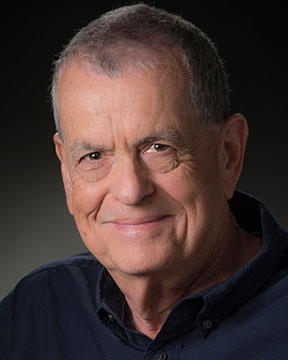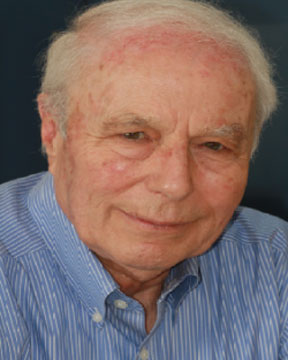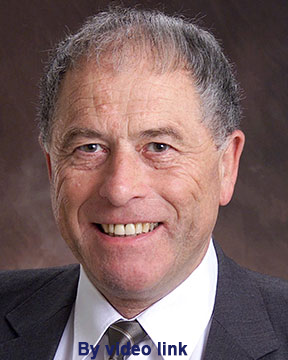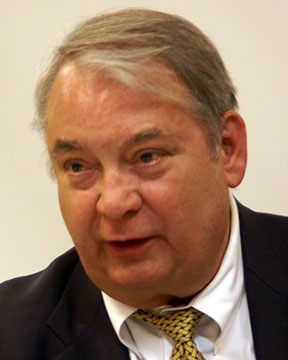

In Honor and Memory of Nobel Laureate Dr. Rudy Marcus
(Passed away on July 16, 2026)
(To Be Updated)
(Passed away on July 16, 2026)
(To Be Updated)



The Delian probelm comes from the antiquity [1,2] . Delos - at the center of the Cyclades - is the Island where the twins Apollo and Diana were born. Nevertheless, Zeus was born in a cave in Crete and Aphrodite was born in Cyprus. Believe or not. Also, the famous film Zorba the Greek (with Theodorakis superb music as OST Original SoundTrack) is about the life in the Cyclades islands, last Century (19th Century). In ancient time, copper was extracted in mines of the Cyclades. These Islands were quite rich until the Xerxes persian invasion. But this is another history.
Summarizing, the Delian problem consists in, by using only ruler and compass, finding the cubic root of 2 and any other numbers .
Square root of 2 is easily found, as well as the square root of all other numbers by compass and ruler.
Here it will be desctibed a construction that , by trial and error, can get the cubic root of any number.
By means of this construction, based on the “arco capaz" of 90o [3,4], It can be made a table relating a given angle and the cubic root of any number.
By means of this trick, then finally the cubic root of any number can be found by compass and ruler.
However this is equivalent to a slide rule solution [5,6].
Thus, this could not solve the Delian problem, but could give an alternative for finding a solution and also provides a new insight in this quite old problem.
To my knowledge, this solution is new and original (unpublished)
References:Archimedes of Siracusa could be regarded Today fundamentally as a Naval engineer. Here, it is very clear: the big advance of science in old Greece and more recently in England, was due to Naval engineering needs.
Then you will see Archimedes is interested on the center of mass,, and also on the flottaing bodies! We keep learning Archimedes in either high school or as graduate students.
This history of Calculus will be briefly described with emphasis on applications.
Demokritos said: it should exist a non-divisible (atom), otherwise the sum ("of stripes") when performing an area integral would be zero. Demokritos was correct, but only after Bragg discovered x-Ray Diffraction in 1914! Bolztmann was rejected by Mach because his theory assumed the existence of atoms.
By another hand Cauchy introduced Epsilons and Deltas, which are useless for engineers… But mathematicians insist in teaching this as “pre-calculus”. This is obviously wrong.
Since Demokritos and Archimedes, and “en passant” by Descartes (the Cartesian plane was fundamental for discovering Calculus!), and arriving in Leibniz and Newton, the main steps on the development of Calculus will be discussed, including the L´Hospital rule, which it seems may explain the “renormalization procedure” in present day Physics. Also the Cantor infinities should be evaluated by using LHospital rule, which has origin in the Bernoullis
Minkowski space provides a natural origin for the quantum phase of a free particle through relativistic time dilation and Minkowski geometry. At the level of propagators, this replaces the ansatz that associates quantum phase with free particle paths with the requirement that inertial worldlines in Minkowski space be marked. Minkowski geometry then provides the structure that converts this to non-relativistic phase. One might question whether this a mathematical artefact, as for example 'zitterbewegung' is often considered to be, or whether it is central to quantum propagation and superposition, as exemplified in the double slit experiment. This talk will discuss the extent to which simulations of the experiment have been tested and verified using Minkowski geometry as the origin of phase. Additionally, the benefits of an ergodic process underneath the sum over paths will be discussed as motivation for the perspective of quantum propagation as a relativistic effect, as well as a potential tool for investigating wavefunction collapse.
Dark energy has been portrayed as unexpected, exotic and mysterious, but the explanation could be extremely simple, and significant for understanding the universe. The result that indicates this possibility (the smoking gun) is the Planck satellite’s finding that dark energy is approximately 68 % of the total energy of the universe, rather than the previous value of 74 % from supernova measurements. The measured flatness of the universe is also significant. If we incorporate energy in the mass term, this means that the acceleration responsible for dark energy could be exactly H02r, where H0 is the Hubble constant for a flat universe. Integrating to obtain the usual redshift velocity relation, we find both acceleration and velocity equations solely from the data, with no conjectural or speculative element whatsoever, and no additional theoretical content or modelling (i.e. no need for a catastrophic cosmology). In addition, inverse square laws and direct linear relations have an intrinsic duality, suggesting again that something fundamental is at work, connecting gravity and its fictitious local manifestation as inertia, through a supposed ‘magnetic’ component of the inverse square law proposed by Sciama in 1953. This would happen if the proportion of dark energy in the universe were exactly 2/3 or 67 % of the total, and this relation was predicted in various publications before the experimental discovery of the dark energy.
Direct particle interaction (DPI) — the action-at-a-distance electrodynamics of Schwarzschild, Tetrode and Fokker, developed by Wheeler and Feynman and later by Hoyle and Narlikar — holds that there are no fields, only charges, each acting on every other along the light cone, half into the past and half into the future. The programme was set aside rather than refuted, and there are now reasons to take it up again. This talk presents them.
Field theory and DPI embody opposite intuitions. A field separates: it is a local medium standing between charges, with degrees of freedom of its own, allowing each charge to be described without reference to the others. DPI connects: the elementary object is the exchange between a pair of charges, and a particle is the sum of its connections. Field theory needs a spacetime canvas on which fields are painted; DPI needs only the invariant intervals between events on worldlines. I will argue that this inverts the usual order of explanation — spacetime is not the stage on which interactions occur but the structure that the totality of interactions defines, as distance in a graph is defined by its links — and that physics is then the theory of a network, with the local causal field as the coarse-grained view of that network from one of its nodes.
Wheeler and Feynman made the theory’s standing depend on complete absorption, the condition under which the time-symmetric exchange reproduces purely retarded radiation. I will present a derivation of the Dirac equation from DPI in which this condition has a different and lower status. The derivation works with the adjunct potential of the rest of the universe acting on a single charge on both its forward and backward light cones; the local electron responds to the response of everything else, and the Dirac wavefunction emerges as a bilinear accounting of advanced and retarded connections, with the electron mass set by the frequency of that potential. Time-symmetric exchange is thereby placed at the foundation of quantum mechanics rather than being something that quantum mechanics must be protected from, and the nonlocality of quantum mechanics becomes the visible trace of the connections from which both particles and spacetime are built.
The absorber question does not disappear; it changes form. Wheeler and Feynman did not examine the possibility that emission is directed towards the absorber — that radiation into what conventional theory treats as empty space, and expects to be isotropic, is in general not quite so. I will suggest that this is a prediction of DPI with an observable signature, and that the reported coherent alignments, over gigaparsec scales, of the optical polarization vectors of quasars and of the axes of radio jets — effects that are currently unexplained — may be evidence of it.
The goal of this investigation is to derive gravity's clock structure based on the slowing of clocks near matter and the fall of bodies toward where clocks run slow from the dynamics of events themselves, rather than inserting the gravitational potential manually. Companion papers in my study constructed an operational event field from measured clock-frequency ratios, whose gradient reproduces gravitational acceleration in the weak-field limit [1,2]. This talk presents a generating mechanism and its numerical verification. The substrate is a conservative autocatalytic kinetic network of relational event progression, whose running state sustains a steady cycle turnover that serves as the network's natural clock. When the network is extended through space by any local transport respecting its conservation law, exactly one long-range mode survives: the conserved event budget itself. Conservation forbids screening, so a region of matter maintaining a steady net uptake of event activity casts an inverse-distance depletion halo. That is, a region of slowed clocks with the Newtonian profile and, with no sign choice available, the correct sign. Nonlinear simulations confirm the mechanism, including exact flux bookkeeping and a fully closed variant in which gravity coexists with exact global conservation. The framework's discriminating observable is a parametrized violation of local position invariance, testable by precision optical clock networks [3,4]. Gravity, on this account, is the conserved-transport shadow of matter's event processing whereby matter processes events, conservation spreads the cost, and things fall toward where the processing is paid for.
References:Physics, at the fundamental level, is concerned only with a single system, that of the fermion or fundamental particle, and it is possible to conceive the actions of the entire universe as those of a single fermion. We have had a quantum mechanical equation for the fermion – the Dirac equation for nearly a hundred years – but no one has imagined that that equation alone could even lead to all the developments encoded in the Standard Model of particle physics. This is partly because the equation is not normally expressed in its most significantly meaningful form, but it is also because ‘derivation’ is generally taken to mean a deductive mathematical consequence given certain conditions rather than an unfolding of the innate structure that is built into the equation as a result of more fundamental principles. The equation is not necessarily the source of these principles, rather the codification of them. In fact, given these additional considerations, it is possible to see the equation in its most physically meaningful form as the source of all current aspects of the Standard Model and even some things beyond it. In addition, the full statement of the equation is not necessary for these derivations, only the definition of the fermion creation operator that the equation requires. So, the question that we will be answering is the more restricted one of whether physics can be defined by a single operator, rather than a single equation.
To promote sustainable biosphere, our mathematical theories must be structured to reveal the actual engineering processes taking place in nature, so we can successfully emulate them in all fields. As an experimental physicist, I present a bottom-up engineering thinking approach to modeling our vast and complex universe. The human thinking brain is itself an unfathomable and complex operational physical system that has the propensity of exuding diverse thinking logics. Yet, we have demonstrated the capability of imagining and modeling the physically transforming interaction processes, which are going on both in the cosmic arena and in the biosphere, as “dust-to-dust” evolving systems. We are fortunate that the rules of interactions in nature are strictly causal and logically bounded by the master rule of energy conservation. Human causal logic has been allowing a steady advancement in our discovery and understanding of the rules of interactions between diverse objects and their physical transformations through mutual energy exchange process. First, we are reluctant to recognize the very physical existence of the source of this fixed energy of the universe. Is it Cosmic Ether, or the vacuum fluctuations? Second, we have been reluctant to recognize the systematic limitations of our logical tools we use to capture the reality of the universe: (i) postulate framing logics, (ii) theory framing logics, (iii) experiment construction logics and (iv) interpretation logics. We have already taken the best practical approach to analyze a very complex cosmic system by “chewing” smaller segments and then try to connect them afterwards (unification dream). But we have been failing to unify them for almost over a century, which is a top-down approach. The bottom-up approach is to think like engineers and keep re-structuring the models from the bottom up, iteratively, while nudging them to conceptually merge with other working theories. The limitations of each separate working theories will start becoming obvious allowing us to correct them pragmatically, correcting the very foundational postulates, theories, etc. It is like fitting children’s zig-saw puzzles. I will provide a number of examples of tuning up mathematically correct logic, which does not match up with the actual interaction processes that generate the data. One simple example is the Non-Interaction of Waves (NIW). The wave equation allows the Mathematical Superposition Principle (MSP). But the “+” sign is an operator that can be executed only by a physical entity (detector) that can perceive the simultaneous joint stimulations and then execute the mathematical prescription of the “square modulus operation” and then absorb energy out of all the stimulating fields, mathematically defined by the CROSS-PRODUCT term. Thus, the Measurable Superposition Effect (MSE) is generated only by suitable detectors, not by the equation representing just the MSP. Thus, the mathematical logic does not allow the interpretative logic of “single particle interference”. What is missing? Incorporation of the detector’s interaction parameter in MSP equation. To make math as one of the active tools for sustainability, we must structure it to promote “Interaction Process Mapping Thinking” (IPM-T).
References:To replicate and reduce the intermittent vibration and noise generated by a refrigerator compressor when the refrigerator is functioning at its rated speed, parametric accelerated life testing (ALT) was utilized as an organized reliability procedure. ALT covered the following: (1) BX life with ALT plan, (2) vibrational load analysis including the derived transmissibility, (3) ALTs with correction, and (4) judgement to determine if the design achieved the intended BX life. A quantum-carried life-stress formulation for modeling vibration and a sample size formulation creating reliability quantitative (RQ) specifications were proposed. As a case study, this methodology was used to improve the reliability of a refrigerator that had field issues with both vibrations (max: 0.24G) and noise (max: 70dB). A closer examination of the refrigerator determined that the noise and vibration came from a new compressor used in the refrigerator. In the 1st ALT, the vibrations (0.52G and 0.60G) and noise (65dB and 70dB) of two troublesome compressors at the rated speed occurred and were reproduced because of the contact between the shell and stator frame. The intermittent noise and vibration were determined to be identical to those recorded in refrigerators in the field. As an action plan, to reduce the large random vibration due to the uncertainties in such items as the induced load and system characteristics, the minimal clearance between the shell and the frame was extended from 2.9 mm to 7.5 mm because displacement transmissibility at the current frequency ratio, r, was higher than 1. In the 2nd ALT, the refrigerator had no significant noise or vibration issues. After parameter ALTs, the compressor with modifications achieved a B1 lifetime of ten years.
References:Within the non-relativistic regime, the accuracy of Schrödingers equation, its elegant connections to classical mechanics and its widespread acceptance as a hallmark of quantum behaviour tend to encourage the view that the Dirac equation is merely an extension introduced to incorporate relativistic effects. In this paper, we adopt a relativistic path-integral approach to the Dirac equation to demonstrate that the origin of quantum phase lies specifically in the geometry of marked worldlines in Minkowski space. In fact, phase can be understood as a direct manifestation of relativistic time dilation. Likewise, much of the structure of the Schrödinger free-particle propagator reflects how Lorentz boosts are realized in Minkowski space without requiring any appeal to quantum mechanics itself. While this perspective does not diminish the importance of Schrödinger's equation, it serves as a reminder that effective calculational frameworks do not always illuminate the most insightful interpretive features. Despite its computational power and faithful representation of quantum phenomena, Schrödingers equation through its reliance on Galilean invariance tends to obscure the origin of wavefunction phase, as well as the underlying geometric structure of its propagator.
The quaternion group can be modeled by the symmetries of a rectangle (the Klein 4-group) with a topological belt attached to that rectangle. The other end of the belt is attached to a sphere containing the rectangle (or to a convenient spot to act as an anchor). The belt can undergo isotopy (continuous movement) around the rectangle, but the other end of the belt is anchored to one place. A twist of the rectangle by Pi radians around any spatial axis is an order 4 operator with regard to the topological twist of the belt. The 2PI turn acts as -1. Any three perpendicular axes satisfy, in this topological sense, the basic quaternion relations i^2 = j^2 = k^2 = ijk = -1. All of this can be illustrated with belts and hands and arms. We generalize this topological belt realization of the quaternions to symmetries of any object in three space with an attached belt. The symmetries of the object are a subgroup G of the rotation group SO(3) and the new group obtained by attaching the belt is isomorphic to the doubled symmetry group obtained by taking the inverse image of G in the unit quaternions S^3 that double covers SO(3). The talk will discuss these relationships and a generalization, that is work in progress, for a topological belt realization of the octonions. In the course of that discussion we will discuss interesting properties of the Cayley Dickson Tower that constructs recursively the complex numbers from the real numbers, the quaternions from the complex numbers, the octonions from the quaternions and so on ad infinitum. There is a rich vein of topology and geometry to be explored in relation to these algebras.
This talk shows how discrete calculus and discrete physics can be placed in a noncommutative context. We reformulate discrete derivatives as commutators.
We show how gauge theoretic structures arise in a noncommutative calculus where the derivations are generated by commutators. These patterns include the Einstein Tensor, Hamilton's equations, the structure of the Levi-Civita connection, the formalism of general relativity, generalizations of electromagnetism that are related to gauge theory and with the early work of Hermann Weyl. The territory here explored is self-contained mathematically. It is elementary, algebraic and subject to generalizations that will be discussed in the talk. The key references to this talk are the paper [1] by Freeman Dyson, the paper [2] by the speaker and Pierre Noyes and the papers [3],[4] and [5] by the speaker.
We explore calculus in a noncommutative framework and its relationships with physics. It is well known that quantum mechanics can be formulated in such a framework. Here we begin with classical physics and show that it is illuminated by thinking about a context of non-commutativity. We show in detail how discrete calculus is naturally put in a non-commutative context so that the discrete derivative is represented as a commutator. We show how discrete calculus embeds in noncommutative calculus. This indicates an arena of applications of the methods of the present work. In particular, we discuss a model for discrete measurement and show how commutators arise in this model, and how a commutator of position and momentum is solved in the discrete context by a Brownian walk.
There is no continuum differential calculus in this work. There are no topological spaces. There are no bundles, no tangent spaces, no cotangent spaces,
no spaces at all. The contents of this work are entirely algebraic. We are exploring the consequences of
derivations defined by commutators in an abstract algebra. What is remarkable is that many patterns of physics and gauge theory arise in this algebraic context. It is our intent to explore and
exhibit these patterns.
We discuss the structure of the Einstein Tensor and how the Bianchi identity can be seen from the Jacobi identity in a noncommutative world We applie these patterns to general relativity.
We can define curvature in noncommutative worlds that satisfies all the symmetries of the Riemann tensor used in general relativity. Given that N_a and N_b are matrices, then the matrix curvature R_{ab} = [N_a, N_b ] is said to be an Einstein Curvature if
[N_a , N_b ]_{cd} = [N_c , N_d ]_{ab}.
An Einstein Curvature R_{abcd} = [N_a , N_b ]_{cd} satisfies the symmetry conditions of the Riemann Tensor for General Relativity. By our observations about the Bianchi Identity, it follows that Einstein curvature in a noncommutative world gives rise to an Einstein Tensor G^{ab} = R^{ab} - (1/2)Rg^{ab} with vanishing divergence. We explain this correspondence and give a new diagrammatic treatment of the contraction of the Bianchi identity and the vanishing of the divergence of the Einstein tensor. This is a first step in doing general relativity in noncommutative worlds.
This talk traces the parallel development of the Telegraph and Klein-Gordon equations. For the latter we consider worldlines in Minkowski space along which special events occur at a definite characteristic scale; this being the analogue of the mean free path or mean free time in the diffusive system. In classical statistical mechanics, the mean free path marks the transition between fractal and inertial geometry, and the characteristic scales at which the transition occurs combine to yield a diffusion constant. In Minkowski space the corresponding characteristic scale is the Compton length, but the transition in geometry at that scale is no longer to a simple path segment; it is to a characteristic oriented area whose orientation reverses between Events and contributes to negative case counting. This extra structure is intrinsic to the geometry of spacetime itself and does not require an ansatz to introduce the quantum mechanical phase of paths. The reason this goes unnoticed in non-relativistic quantum mechanics is that the Lorentz transformation is absent there, and a formal analytic continuation is needed to imitate the effects of boosts in spacetime.
Two-Time relativistic Bohmian Model (TTBM) is a theory in which the apparently paradoxical aspects of Quantum Mechanics are the effect of the existence of an extra unobservable time dimension. The hypothesis that matter is capable of motion with respect to an additional independent time (thus resulting instantaneous with respect to usual time) is capable of restoring determinism, explaining the Zitterbewegung without evoking virtual antimatter. The model also predicts a relativistic correction of the uncertainty principle.
Here the model is first summarized (definition, salient properties and empiricism) and after applied to a generic spherical atomic orbit, obtaining electron oscillations in the new time dimension, τ , which demonstrate the static nature of the orbitals. Something very similar happens in the case of a particle in a box, where τ -oscillations cause the particle to spread out at steady states. Some astrophysical and about spin speculations follow. Finally, it is discussed how the model fits into the fundamental problem of the definition of time in Quantum Mechanics.
The roots of this analysis lie in the 19th Century, in Fourier’s analysis of waveforms and the introduction of a phase known as the eikonal, and in the development of the mathematics of tensor fields. This analysis of waveforms underlies modern quantum field theory, but also applies to classical waves such as water waves.
These ideas were developed significantly in the mid-20th Century.
The field of signal processing considered the transmission of data via electromagnetic waves. Gabor[1] showed how such waves obeyed an uncertainty relation of a similar form to that established by Heisenberg in quantum theory.
Ville[2] defined the “instantaneous frequency” of a wave, providing a description of frequency modulation. This can be adapted to the U(1) gauge potential which is the basis of quantum electrodynamics. The action of this gauge potential on a wave is described by the Aharonov-Bohm effect.
Landau and Lifshitz[3] gave an account of electromagnetic waves which not only used the eikonal concept but also described the energy-momentum carried by a monochromatic wave and its density.
The analysis presented here seeks to bring these ideas together, to explore the extent to which the same mathematics can describe both classical waves and quantum ones. In the context of curved spacetime, this permits geometric explanations for quantum effects, in a framework which is consistent with General Relativity.
We take a Wigner-like approach to analysing field-valued quantities, considering the eigenfunctions of differential operators and symmetry requirements. Starting in a single dimension, an arbitrary field configuration in a Hilbert space is expressed first as a Fourier series and then using an instantaneous wavenumber. We relate these through the concepts of frequency modulation and changes of parameter and basis.
We then extend the analysis to four-dimensional spacetime and consider propagation velocity. We employ analysis from classical electromagnetism to ascribe an energy-momentum density to a monochromatic wave, which is proportional to its four-wavenumber. This can be integrated over a volume, to get an energy-momentum four-vector which is not a field-valued quantity, but rather is associated with the whole of that region of spacetime. Applying Gabor’s result, we find uncertainty relations that have explicit volume-dependence.
We also consider the four-component electron spinor. We take the energy eigenvalue equation in its “rest frame” and then perform a Lorentz transformation, to get a relativistic equation which again has explicit volume-dependence.
We then look at global U(1) transformations as a phase shift and local U(1) transformations as a modulation of wavenumber. This is the principle behind the Aharonov-Bohm effect, as we describe with reference to Berry’s water wave experiment[4] and Kasevich’s gravitational experiment.
Finally, we briefly consider these phenomena in curved spacetimes.
For a spacetime in which a spatial Cauchy slice is compact, such as de Sitter space, energy-momentum for the whole volume may be defined. This volume can be used in equations arising in the flat spacetime analysis, allowing a tentative identification of a constant in these equations with the reduced Planck constant.
With this identification, the uncertainty relations become those of Heisenberg, and the relativistic equation for the electron becomes the Dirac equation. We consider issues raised by this identification and the use of Fourier modes in a curved spacetime.
The expression for the energy-momentum density in flat spacetime has a natural generalisation to a (divergence-free) expression for a field-valued quantity in curved spacetime. If we calculate the energy-momentum density for root mod g, the volume element, a known result of Gray[5] and Rudelius implies that this is proportional to the Einstein tensor for the spacetime.
This gives us a new interpretation of Einstein’s field equation. This equation has, until now, been taken as describing the curvature due to matter in spacetime. In the new interpretation, matter is seen as a manifestation of curved spacetime, and the equation translates between the matter picture and the curvature picture. That is, it is an identity relating the curvature of spacetime to the energy-momentum of that spacetime when viewed as a waveform.
Questions remain around the relationships between harmonics on a closed spatial hypersurface, those in local (flat) frames and those in the curved spacetime in which the hypersurface is embedded. However, the overall conclusion is that this framework shows considerably promise as one in which quantum effects arise naturally and the concepts and equations of general relativity hold firm.
References: