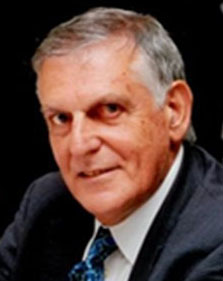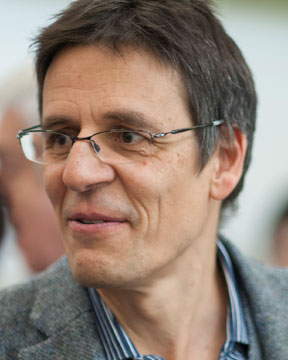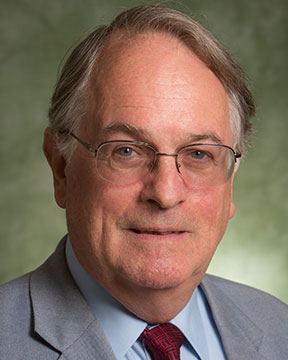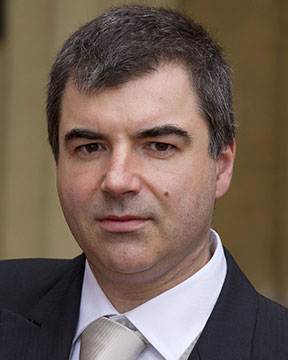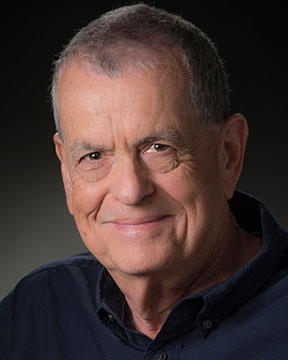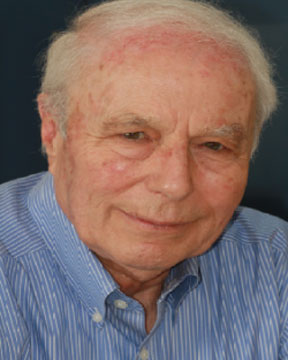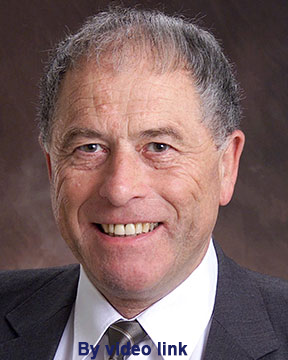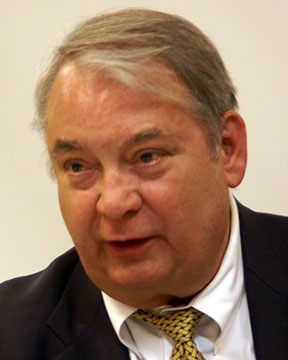

In Honor and Memory of Nobel Laureate Dr. Rudy Marcus
(Passed away on July 16, 2026)
(To Be Updated)
(Passed away on July 16, 2026)
(To Be Updated)

Atherosclerosis, insulin resistance, oxidative stress, dysregulated VLDL metabolism, and hepatic steatosis, are commonly investigated as partially distinct pathological processes despite their close metabolic interdependence. This conceptual review integrates redox biology, insulin signaling, endoplasmic-reticulum stress, lipid storage, fatty-acid oxidation, and lipoprotein metabolism into a unified ERK–hepatic–adipose integrated network where selective ERK inhibition may simultaneously enhance antioxidant defense, suppress pathological hepatic lipid storage, increase PPARα-dependent β-oxidation, and reduce triglyceride-rich VLDL1 production. From this integrated network, extracellular signal-regulated kinase (ERK) functions as an upstream regulatory node linking all the above-mentioned processes, while IRE1α emerges as a central downstream hub linking these processes. The novelty lies in integrating fragmented mechanisms into a mechanistically continuous, experimentally testable network connecting hepatic steatosis to atherogenic dyslipidemia and atherosclerosis.
We propose that selective inhibition of pathological ERK activity may simultaneously improve four interconnected processes: (1) antioxidant defense optimization, (2) suppression of pathological hepatic lipid storage, (3) reduction of triglyceride-rich VLDL1 production, (4) optimization of fatty-acid β-oxidation. These four pathway arms of the integrated network form the basis of the ERK–hepatic–adipose metabolic axis developed in this work.
FACTS
The report discusses major changes in the US grant submission process. The report and additional information released in the time interval between the submission of this abstract and the presentation of the paper will be discussed. Current information about the process is incomplete, but we know that major changes are coming. This paper is meant to be helpful and share information with those who are interested. The author hopes that this will help the community.
Are there other Worlds in the universe? Does life exist elsewhere in the cosmos? The technology of our time has made it possible to transform this dream of antiquity into a fascinating field of current astrophysics.
Thirty years after the discovery of a first planet orbiting a star like our sun, a few thousand planetary systems have been discovered. These first discoveries revealed to us the astonishing diversity of these systems, very different from our solar system: orbital periods of a few hours, planets with very high eccentricity, ocean planets, rocky or gas giant planets with sometimes retrograde orbits, etc.
The detection and characterization of these planetary systems is the result of various techniques, Doppler spectroscopy, planetary transits, astrometry or gravitational lensing Currently, some of these techniques have the sensitivity required to discover planets with masses smaller than that of our Earth. The combination of the results of these techniques (mass from Doppler spectroscopy, diameter deduced from the transit) makes it possible to deduce the average density of the planet. This synergy opens the field of comparative planetology.
After the euphoria of these first discoveries, the era of studying the atmospheres of exoplanets is now beginning. Fascinating, despite the enormous contrast between the luminosity of the star and that of the planet, the analysis of the atmospheres begins and will benefit from space telescopes and giant telescopes on the ground (up to diameter of 39m).
Does life exist in other places in the cosmos? - Vertiginous question - The analysis of planetary atmospheres may reveal biosignatures, these spectral characteristics induced by the development of life. Advances in spectroscopy studies of exoplanets make us think that the search for extraterrestrial life is possible.
Searches for rocky planets in the habitable zone of their host star reveal objects at distances “relatively close” to our solar system but the humanity will not emigrate to an exoplanet!
The FLOGEN Sustainability Framework as a unique structured approach that combines 3 different criteria to be achieved simultaneously sustained by 3 equally important pillars/actors has been applied in modern medicine to address its numerous challenges. As medical technologies and healthcare systems evolve, it is increasingly important to consider their environmental footprint, resource efficiency, ethical responsibility, and long-term societal impact. This framework emphasizes the integration of sustainability principles across medical research, healthcare delivery, and biomedical innovation, highlighting the value of interdisciplinary collaboration and systems-level thinking. By embedding sustainability at the core of medical development, the FLOGEN Sustainability Framework enables resilient, responsible, and innovation-driven healthcare solutions that enhance human well-being while preserving environmental and societal resources for future generations.
The FLOGEN Sustainability Framework as a unique structured approach that combines 3 different criteria to be achieved simultaneously sustained by 3 equally important pillars/actors has been applied in modern medicine to address its numerous challenges. As medical technologies and healthcare systems evolve, it is increasingly important to consider their environmental footprint, resource efficiency, ethical responsibility, and long-term societal impact. This framework emphasizes the integration of sustainability principles across medical research, healthcare delivery, and biomedical innovation, highlighting the value of interdisciplinary collaboration and systems-level thinking. By embedding sustainability at the core of medical development, the FLOGEN Sustainability Framework enables resilient, responsible, and innovation-driven healthcare solutions that enhance human well-being while preserving environmental and societal resources for future generations.
The FLOGEN Sustainability Framework as a unique structured approach that combines 3 different criteria to be achieved simultaneously sustained by 3 equally important pillars/actors has been applied in modern medicine to address its numerous challenges. As medical technologies and healthcare systems evolve, it is increasingly important to consider their environmental footprint, resource efficiency, ethical responsibility, and long-term societal impact. This framework emphasizes the integration of sustainability principles across medical research, healthcare delivery, and biomedical innovation, highlighting the value of interdisciplinary collaboration and systems-level thinking. By embedding sustainability at the core of medical development, the FLOGEN Sustainability Framework enables resilient, responsible, and innovation-driven healthcare solutions that enhance human well-being while preserving environmental and societal resources for future generations.
Develop an institutional narrative about how knowledge and responsibility can transform mining challenges into sustainable solutions. The guiding thread will be Samarco’s nearly 50-year history. The company was founded on a pioneering project aimed at making better use of low-grade iron ore and has since connected the Brazilian mining industry to the global steel supply chain, which is essential to modern life.
The Fundão dam breach in 2015 left a profound mark on this journey. Since then, the company has committed to reparation and changed the way it operates, adopting new safety standards and implementing solutions focused on tailings management and circularity.
Samarco’s relationship with communities in the states of Minas Gerais and Espírito Santo has always been an integral part of its operations and has taken on new dimensions in recent years. Today, the company seeks to strengthen these ties by aligning its activities with reparation efforts and the development of the territories.
Building on this journey, Samarco is planning its next steps. With the expansion of its productive capacity, the company aims to strengthen its position in the global market through safer, more innovative operations with lower carbon footprint, capable of creating opportunities and generating value for people and territories. Its products can contribute to the transition of the steel industry toward lower-carbon production. This context also reinforces the strategic importance of Brazilian mining in relation to global agendas, such as critical minerals and the transition to a low-carbon economy.
As it approaches its 50th anniversary, Samarco is not simply seeking to return to what it once was. Instead, it aims to transform the lessons learned throughout its history into a lasting contribution to the mining industry and the development of Brazil.
KEY MESSAGES TO BE ADDRESSED:
The past fifty years have witnessed great advances in medicine and health care. Some examples include greatly improved prevention of cardiovascular and other diseases, high-resolution imaging technologies for early detection of disease and effective novel drugs. All these great improvements were due to scientific research and development, both in the academia and in the industry. I shall discuss the contribution of two types of research, basic and applied investigation, to progress in medical treatment. I shall describe some examples leading to the conclusion that important innovations in health-related industries are always based on great discoveries in basic biomedical sciences.
The optical detection of single molecules has provided a new view into the nanoscale. Thirty-seven years ago, single molecules were first detected optically, but how was this done, and how do we really detect a single molecule today, and even more importantly, what good is it? Beginning with seemingly esoteric low temperature studies of molecules in crystals driven by low temperature optical storage research at IBM, single molecules were first detected optically in 1989. Very quickly a number of surprises appeared, which often occurs when a new frontier is breached. Surprises continues even at room temperature, for example, on-off blinking due to reversible entry into dark states. Some thought this property was detrimental, but it eventually led to super-resolution microscopy, which enables biological structures and behavior to be observed in fixed and live cells or in materials systems with resolutions down to 20-40 nm and below, far beyond the diffraction limit.
So much more science can be uncovered when the fuzziness of the optical diffraction limit is removed! Examples range from the details of protein superstructures in bacteria, to protein bands in axons, to the shapes of amyloid fibrils, and much more. Clever optical engineering ideas came into play which altered the fundamental way in which a microscope works, providing a simple, useful 3D single-molecule microscope. Even the locations of nanoscale viral RNA structures and their related proteins can be observed in a mammalian cell undergoing coronavirus infection. These and other advances serve to illustrate the continuing richness of the field and the ongoing cleverness of many investigators around the world.
Ageing is driven by the inexorable and stochastic accumulation of molecular damage that eventually compromises cellular function. While this process is fundamentally haphazard and uncontrollable, ageing is broadly influenced by genetic and extrinsic factors. It is becoming increasingly apparent that most such interventions interface with stress response mechanisms, suggesting that longevity is intimately related to the ability of the organism to effectively cope with both intrinsic and extrinsic stress. Key determinants of this capacity are the molecular pathways that underlie age-related changes in the effectiveness of the response to stress. General and cargo-specific autophagy emerges as an integral part of cellular and systemic stress responses. We find that mitophagy, a selective type of autophagy targeting mitochondria, and nucleophagy, the selective autophagic recycling of nuclear material are important determinants of germline immortality and somatic ageing, under conditions of stress. These homeostatic mechanisms are vital in long-lived neuronal cells, where they mediate damage removal during ageing to prevent neurodegeneration.
Ribosomes are the ubiquitous machines of life, in bacteria, plants, animals, making proteins at the instructions of the genetic blueprints. There are more. than a million in each eukaryotic cell and they work with incredible precision. But they are formed each time anew – for each new genetic message – from two subunits, one large, one small, which must associate across more than a dozen of bridges made of proteins and RNA.
We have looked at this process of subunit association – which takes fractions of a second – with a technique of time-resolved cryogenic electron microscopy that has a time resolution of a few milliseconds. The story we discovered is breathtaking, and features (1) magnesium ions which decorate the subunits, creating the exact charging texture that allows the subunits to recognize each other and form the bridges (2) several pathways of association, one very fast (<10 ms), and several slow, going through distinct intermediates.
The beginning of the twenty-first century has been marked by profound economic, technological, environmental, and social transformation. This interview examines the contemporary global economy and the growing influence of sustainability, artificial intelligence, digital information, globalization, climate change, innovation, and demographic change on economic development. It discusses the major achievements of this era, including technological progress, increased connectivity, and improved access to knowledge, while also addressing challenges such as inequality, environmental pressures, cybersecurity risks, geopolitical tensions, and labour market disruption. By analysing these interconnected trends, the study explores the opportunities and obstacles facing modern societies and identifies key pathways toward a more sustainable, resilient, innovative, and equitable future.
With the thirty years added to our life span in the 20th century compared to the life span people enjoyed merely 120 years ago, the question is whether the trend is going to continue, and how long we are going to live. Much is dependent on modern medicine - new devices, our ability to replace inactive tissues with young functional ones, and m0odern drugs. Many important drugs such as penicillin and aspirin were discovered by serendipity. Other major drugs like statins - the cholesterol biosynthesis inhibitors, were discovered using more advanced technologies, such as screening of large chemical libraries. One disadvantage of screening is that the mechanism of action of the drug we are seeking is typically unknown at the time of its discovery, and the process largely is random, dependent on the chance to discover one active compound in a collection of millions. Another disadvantage is the model on which the screen is based - cultured cells or inbred animals – which do not faithfully reproduce the disease in humans. Thus, we have started to realize that patients with apparently "same" diseases – breast or prostate cancer, for example - respond differently to similar treatments. This difference stems from the fact that: (i) human beings carry different genetic repertoires and behave differently to different pathogenic processes; and (ii) that the apparent "same" disease" can evolve in different patient from completely different mechanisms to have different molecular bases. Thus, breast or prostate cancers appear can now be sub-divided to smaller distinct classes according to their molecular origins. As a result, we are exiting the era where the treatment of many diseases is “one size fits all”, and enter a new era of “personalized (or precise) medicine”, where the treatment is tailored according to the patient’s molecular/biochemical profile. This era will be characterized initially by the development of technologies to sequence individual genomes, transcriptomes, proteomes and metabolomes, followed by identification and characterization of new disease-specific molecular markers and drug targets, which will be then followed by design of novel, mechanism-based drugs to these targets. This era will be also accompanied by complex bioethical problems, where genetic information of large populations will become available, and protection of privacy will become an important issue.
In this Q&A session, the speaker will be glad to address any questions, general or scientific. His published research has included the following topics: Unimolecular Reactions (RRKM Theory), Electron Transfer Theory, Extension to Other Transfers, including Enzyme Catalysis, On-Water Catalysis for Organic Reactions in Emulsions Biological Motors involving Interconversion of Mechanical and Chemical Energy, Semiclassical Theory relating Quantum Mechanics to Classical Mechanics, Mass-Independent Isotope Effect for Ozone in the Stratosphere and Mass-Independent Isotope Effect in Earliest Solids in the Solar System.
Some references are given in his webpage: http://chemistry.caltech.edu/rudyamarcus/.
Maringá is committed to the challenge of the circular economy and has issued a call for proposals aimed at identifying technologies capable of fully transforming the city's municipal solid waste (MSW) into industrial feedstock. The municipal government has pledged to supply 100 tons of MSW per day to each technology that proves its economic and environmental viability. The city has the potential to support up to four different solutions. Sixteen proposals were submitted, and the most suitable ones are currently being selected, aligning with Maringá's goal of becoming a showcase for viable solutions for other cities looking to reduce their own waste generation. The presentation will cover this case study and its current stage of development.