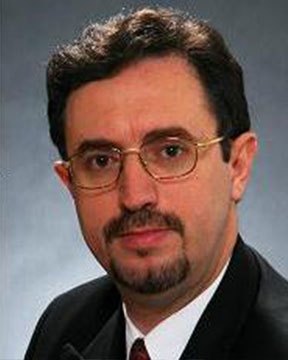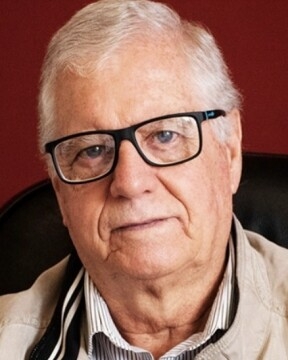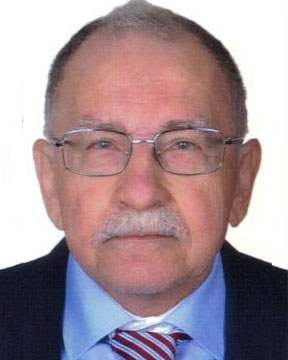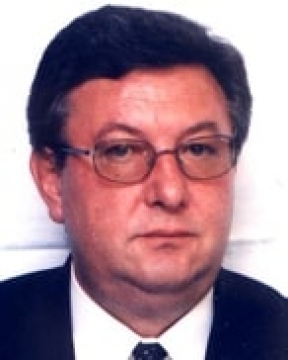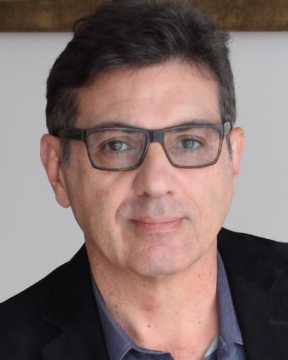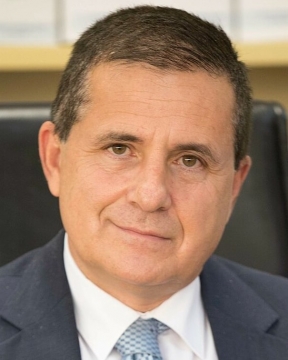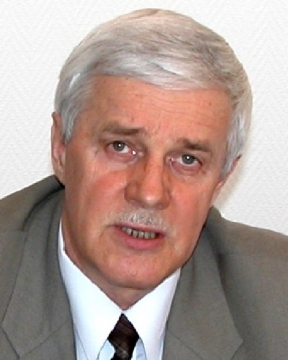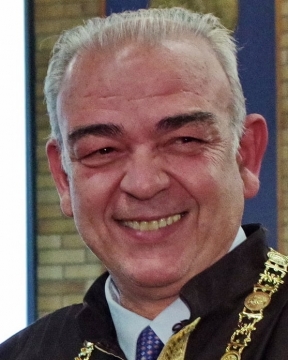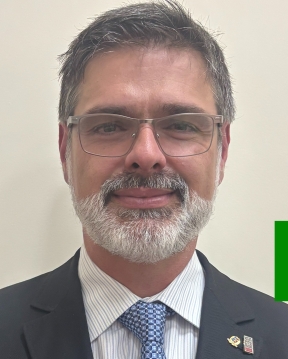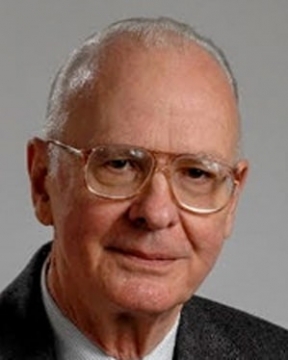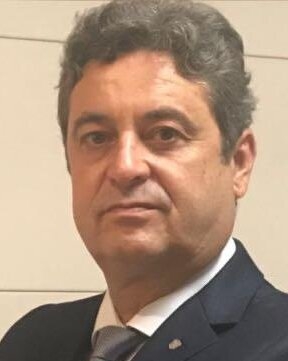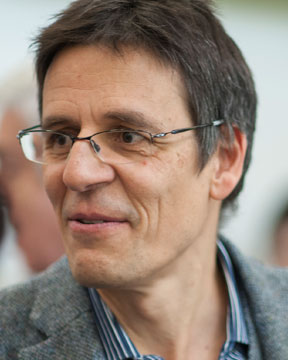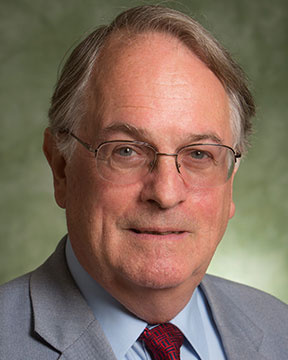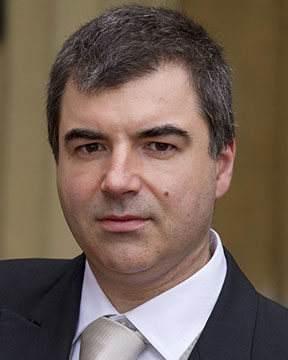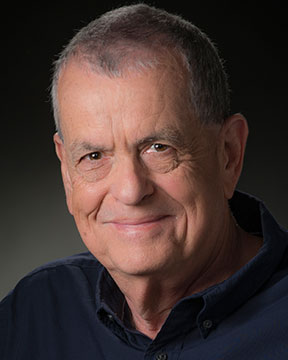
This major memorial symposium is in honor of the distinguished work and lifetime achievements of Dr. Claude-Henri Gorceix, a very well-known individual with deep impact in sustainable minerals and metals processing.
He was born on October 19, 1842, in the city of Saint-Denis-des-Murs. He was the sixth of seven children of Mayor Antoine Gorceix and Valérie-Cécile Beaure-la-Mareille. Until his father's death, Claude-Henri Gorceix's childhood was divided between Saint-Denis-des-Murs, where he attended primary school, and the city of Saint-Léonard-de-Noblat, where the Gorceix family owned an estate called Moulin l’Artige.
On the eve of his 11th birthday, C.H. Gorceix was orphaned. Jean Louis Camille Gay de Vernon (1796–1863), a member of the younger branch of the Gay de Lage family, to which C.H. Gorceix's mother belonged, became Claude-Henri's guardian. Jean Louis was a man of science and history who studied at the École Polytechnique in Paris, was a resident and founding member of the Limousin Archaeological and Historical Society in 1845, and was a staff officer, pursuing a military career during the restoration of the French Republic. As a director of studies, he published historical biographies, notably about his most famous relative, the scientist Gay-Lussac, and Marshal Gouvion-Saint-Cyr. He wrote articles about the Limousin region, horses, and novels. It was in this rigorous environment, due to its military proximity, and intellectual influence from the biographies and books he published, that C.H. Gorceix came to live.
In 1855, at the age of 13, Claude-Henri received a scholarship to enter the Collège Royal de Limoges, which in 1890 changed its name to Lycée Gay-Lussac. An excellent student, Gorceix distinguished himself by his great intelligence, dedication, and love of learning. In 1860, his scholarship was transferred to the Lycée de Douai, where he began a preparatory course to try to gain admission to a university in Paris.
The Lycée de Douai offered a special mathematics course that prepared students for entry into the best universities in Paris. In 1862, he enrolled at the Massini Institute to complete his preparation.
In 1863, C.H. Gorceix joined the science section of the École Normale Supérieure de Paris – ENS, located in the block of rue d’Ulm and rue Erasme, in the 5th arrondissement of Paris, a few meters from the Sorbonne University and other educational institutions in the city.
The École Normale Supérieure was created in 1794 by Napoleon to eradicate illiteracy in France, training teachers of Physics, Mathematics, and Literature, who would be responsible for teaching in secondary schools throughout France. It was the institution of higher learning that exerted the greatest influence on the formation of the French intellectual elite until 1903. During C.H. Gorceix's studies, the school was at the height of its reputation, boasting a prestigious faculty: Sainte-Claire-Deville, Pasteur, Descloiseau, and Delesse, names that stand out in the study of science in the 19th century.
During this period, Gorceix distinguished himself, particularly with two mentors. Achilles Delesse, author of the Delesse method, or Delesse Principle, a fundamental concept in stereology that allows the determination of the volumetric proportion of constituents of a rock (or any heterogeneous material) from measurements made in a flat section, considered Claude-Henri his best student in the natural sciences department. Louis Pasteur, the renowned scientist who developed pasteurization (a thermal process to kill microorganisms), created crucial vaccines such as those for rabies and anthrax, revolutionizing public health and immunology, was, at that time, a professor of physics at the École Normale Supérieure in Paris. Pasteur considered Gorceix his best student in the physics department at the ENS.
Claude-Henri Gorceix obtained his professorships in physics and mathematics in 1865. After successfully passing the mathematics and physics exams, as permitted by the regulations of the time, he became an assistant professor of physical and natural sciences in 1865.
According to the ENS project, CH Gorceix was appointed professor of physics at the Lycée d’Angoulême, in the commune of the same name, located in southwestern France, in 1866.
A year later, in 1867, Professor Achille Delesse, who had also not forgotten the best of his students, called Gorceix back to the École Normale Supérieure to serve as an associate geology preparer and assistant in his laboratory. During this period, Gorceix obtained a degree in natural sciences from the ENS.
In 1868, Gorceix was invited by the geologist and mineralogist Ferdinand Fouqué (1828–1904) to accompany him in the study of gaseous emanations from some volcanic regions of the Italian Apennines.
In 1869, Gorceix became the first scientist sent to the French School of Athens – EFA (until then, those sent were solely and exclusively literature professors with the objective of teaching the French language in Greece). C.H. Gorceix carried out three expeditions to the island of Santorini, respectively in December 1869, April to June 1870, and October 1871. Alongside his colleague Henri Mamet, he excavated the porous rocks from a volcanic eruption at the archaeological site of the village of Akrotiri, where they found household utensils filled with lentil, barley, and rye grains, which have since become part of the collection of the Museum of the French School of Athens. They also found the remains of an olive tree approximately 40 centuries old, carried personally by Gorceix on his own shoulders, not without first generating considerable controversy over whether to send the piece from Santorini to Athens. From this fieldwork, Gorceix and Mamet brought back splendid vases, currently housed in the EFA Museum, which has in its current collection 106 vases or fragments of ancient vases and two terracotta plaques. 85 of these pieces come from excavations carried out in 1870 on the island of Thera. In 1972, Professor Mirinatos resumed research at this site. His research confirms that the houses of Akrotiri, from where the vases brought by Gorceix and his colleague to the French School of Athens originate, were buried by a volcanic eruption dated to 1520 BC. The vases can therefore be dated to the third quarter or the beginning of the last quarter of the 16th century BC.
Years later, Georges Radet (1859–1941) described the innovation of Gorceix's work in the following terms: “With Gorceix, the science section was inaugurated. It existed only in him, and through him, from June 1, 1869, to June 1, 1873. It constituted the main originality of the period we are describing. Its only representative is a curious figure... Claude-Henri Gorceix, who should have lived under the Directory and participated in the expedition to Egypt. He was born to observe nature to the sound of cannons, between the sabre cleaver of a hussar and the bear skin of a grenadier. We cannot accompany him on his explorations which, presenting some risks in those countries, then infested with bandits, evidenced his adventurous spirit. He made numerous notes in various scientific journals, without wanting to oblige himself to bring them together in a single volume.”
On July 19, 1870, war broke out between the French Empire and the Kingdom of Prussia, triggering the fall of Napoleon III and the end of the monarchical system in France, concluding the era of the Second Empire, which was replaced by the French Third Republic. Even though he was exempt from war due to his membership in the École Normale Supérieure, Gorceix insisted on enlisting in 1871 to defend his country.
CH Gorceix returned to Athens, where, in 1872, he was hired by the Paris Academy of Sciences to conduct studies on volcanic gases and fumaroles on the islands of Nisyros and Kos, on the border between Greece and Turkey.
In 1873, Fouquet invited Gorceix to be his collaborator in studying the volcanic phenomena of the famous Mount Vesuvius. These studies would later have a great impact on the fields of mineralogy and petrology.
In 1874, he resumed his position as assistant professor and preparator at the Laboratory of the École Normale Supérieure, the same year he became a member of the Geographical Society, which was a meeting point for very diverse personalities: explorers such as Duveyrier, Foureau, and Binger; officers, especially from the colonial army, such as Galliéni, Marchand, and Savorgnan de Brazza; diplomats such as Le Myre de Vilers, Pavie, and various consuls, colonial officials and missionaries, engineers, and scholars. Academics were also present, since at that time geography was beginning to take its place in education, specifying and defining its methods. Through its Bulletin, the Geographical Society aimed to provide geographical news from around the world and to follow the work of travelers and explorers. The Society was, and continues to be, a true center of documentation. During this period, he considered dedicating himself entirely to a university career, but history would be different. Destiny had an even greater work in store for him. Gorceix would soon become the linchpin of the intellectual development of the largest nation in South America.
Brazil Enters Gorceix's Life
On his first visit to Europe, Emperor Pedro II met several French scholars whom he deeply admired, such as Pasteur and Chevreul, in their respective laboratories. Among these scholars, he met Professor Gabriel Auguste Daubrée (1814–1896), from the Museum of Natural History and director of the School of Mines, both institutions in Paris.
At the Emperor's request, Daubrée delivered a short "note on the means of achieving a deeper understanding of Brazilian soil and developing the exploitation of its mineral wealth," dated February 1, 1872. The document advised, among other things, the obvious for a geologist: the creation of a general geological map of the Empire and detailed geological maps of the regions where mining was developing in Brazil. According to Daubrée, the undertaking should be carried out primarily by young Brazilians properly educated and trained in European schools. A new note concerning the implementation of "mineralogy and geology teaching in Rio de Janeiro" was written by Daubrée three months after the first, on May 18, 1872, still at the Emperor's request. The most important content of this new note concerns the example of the Chilean experience, where the Polish naturalist Ignacio Domeyko Ancuta (1802–1889) set out to carry out a scientific mission in 1838. Domeyko had sent a certain Chilean student named E. Fonseca to study at the School of Mines in Paris with the aim that he would later become his successor. According to Daubrée, this would be the example to be followed in Brazil: to receive one or more foreigners of proven competence, such as Domeyko, who would implement the teaching of mineralogy and geology in the country, or even to train well-selected young Brazilians with theoretical and practical courses abroad for several years, who could then return to the country to pass on their learning.
Daubrée's ideas aroused greater interest in the Emperor regarding the director of the Paris School of Mines. Dom Pedro II then decided to invite Daubrée to visit and spend a few months in Brazil, sending the invitation on July 6, 1872. Daubrée argued that he had recently been appointed director of the Paris School of Mines and, considering his administrative and family responsibilities, declined the invitation but proposed as a solution that he could train young Brazilians and, if preferable, send a French mineralogist and geologist of his choosing to Brazil.
The Brazilian government accepted Daubrée's proposal, sending four students to Paris to attend the preparatory course at the Paris School of Mines, so they could then pursue specialized three-year courses. In October 1872, the Minister of the Empire informed the director of the Paris School of Mines that the Emperor was also interested in his second proposal, which was to receive a French mineralogist and a geologist in Brazil with the possibility of training Brazilian engineers capable of exploiting the country's mineral wealth.
Two years passed without Daubrée being able to fulfill the proposal he made to Dom Pedro II. The Emperor began to show impatience. Daubrée wanted to send graduates from the Paris School of Mines to Brazil, but under pressure, he ended up accepting a recommendation made by his friend and professor Aquiles Delesse, who at that time taught at the École Normale Supérieure and the Paris School of Mines.
Claude-Henri Gorceix was nominated by Daubrée to Emperor Pedro II on March 6, 1874.
On June 20, 1874, at the age of 31, Claude-Henri Gorceix embarked for Brazil.
On July 24, 1874, Gorceix disembarked in Rio de Janeiro, and was almost immediately introduced to Emperor Pedro II.
Gorceix began working as soon as he settled in. He set up an office at Rua do Lavradio, 94 - Lapa, and gave a series of lectures at the Polytechnic School of Rio de Janeiro to try to gauge the level of Brazilian students.
In February 1875, Gorceix visited the state of Rio Grande do Sul, accompanied by Ladislau de Souza Mello Netto (1838–1894), director of the National Museum. They visited the copper mines of Caçapava and the gold mines of Lavras, in the center of the state, which is still a very rich region in minerals such as copper and amethyst. Gorceix's experience in Rio Grande do Sul led him to write three monographs on the mining operations in the far south of the country.
In May 1875, Gorceix visited the main mining towns, accompanied by João Víctor de Magalhães Gomes and Francisco Van Erven, students of the Polytechnic School of Rio de Janeiro. It was in Minas Gerais that he found the most promising place to found the school, because in those lands the abundance of iron mines was noticeable, exploited by artisans thanks to the rudimentary system of Catalan forges.
At the end of the trip, Gorceix wrote a report to the Empire in which he informed that he had decided to create a School for "miners" in Ouro Preto. The report was sent in September 1875 to the Minister of Imperial Affairs, José Bento da Cunha Figueiredo.
On December 6, 1875, the Imperial decree creating the School of Mines of Ouro Preto was published:
Decree No. 6,026, of November 6, 1875.
I deem it appropriate, for the execution of the provisions of § 7 of art. Article 16 of Law No. 2,670 of October 20 of this year, to create a School of Mines in the Province of Minas Gerais, and to provisionally give it the Regulations that are attached hereto, signed by José Bento da Cunha e Figueiredo, of My Council, Senator of the Empire, Minister and Secretary of State for Imperial Affairs, who shall so understand and execute it. Palace of Rio de Janeiro on the sixth of November, one thousand eight hundred and seventy-five, the fifty-fourth year of Independence and of the Empire.
With the signature of His Majesty the Emperor.
JOSÉ BENTO DA CUNHA E FIGUEIREDO.
Meanwhile, Gorceix continued to do science. The minerals and rocks collected by the first expedition led by C.H. Gorceix in Minas Gerais, accompanied by two students from the Polytechnic School of Rio de Janeiro, F. Van Erven and J. de C. A. Magalhães, received the Medal of Merit at the National Exhibition of 1875.
Gorceix received a grant from the Empire to purchase a building for the headquarters of the School of Mines and a house for the director to live in. He bought three properties to serve as the School of Mines' facilities next to the Church of Mercês de Cima, on Padre Rolim Street in Ouro Preto, and almost opposite the headquarters, he bought a house for the director, which is currently located at 155 Henri Gorceix Street, in Ouro Preto – MG.
In September 1875, Claude-Henri Gorceix was appointed Corresponding Member of the Imperial and National Museum of Rio de Janeiro.
On January 5, 1876, Gorceix was appointed an officer of the French Academy of Public Instruction, Culture, and Fine Arts.
In September 1876, Gorceix held a new series of lectures in Rio de Janeiro to attract prospective students to his School.
On September 28, 1876, Claude-Henri Gorceix became a corresponding member of the Brazilian Acclimatization Association.
Between October and November 1876, Claude-Henri Gorceix received an award for his collection of rocks and minerals from Minas Gerais at the International Exposition in Philadelphia, USA.
The School of Mines was inaugurated on October 12, 1876, with 4 students and 4 teachers.
In 1877, Gorceix became a member of the Commercial Geographical Society of Paris.
In 1877, Gorceix held a new series of lectures in Rio de Janeiro to attract new students.
On September 12, 1877, a decree was published creating, "on a provisional basis," a preparatory course for admission to the School of Mines. The preparatory course began on December 2, 1877.
Due to Gorceix's demonstrated competence in leading the creation of the School of Mines, by 1879 the School showed signs of being fully established.
On March 30, 1881, Gorceix received Emperor Pedro II on an official visit to the School of Mines in Ouro Preto.
On March 31, 1881, Gorceix gave a lecture in Ouro Preto on the Mineral Resources of the Province of Minas Gerais in honor of Emperor Pedro II.
In May 1881, the first edition of the Annals of the School of Mines was published.
On May 24, 1881, Claude-Henri Gorceix was awarded the title of Commander of the Order of the Rose by Emperor Pedro II.
In October 1881, Gorceix returned to France for the first time, having been invited to assume the position of Director of the École Normale Supérieure, replacing Achilles Delesse, who had died. After much deliberation, he decided to decline the offer, remaining as director of the School of Mines in Ouro Preto.
On December 10, 1881, Claude-Henri Gorceix received the title of Knight of the National Order of the Legion of Honor from the French Republic.
On February 6, 1882, Claude-Henri Gorceix became a corresponding member of the Society for Colonial and Maritime Studies of France.
On March 21, 1882, the Natural History Museum of Paris appointed Claude-Henri Gorceix as a corresponding member.
Claude-Henri Gorceix published a monograph on Lund in the 3rd volume of the Annals of the School of Mines. One day after the inauguration of the portrait of Lund, executed by the Sazerat ceramics factory of Limoges, France.
In July 1884, Gorceix returned to France for the second time.
On June 25, 1885, Claude-Henri Gorceix married Constança Guimarães, from Ouro Preto, daughter of Judge Joaquim Guimarães and niece of the writer and also Judge, Bernardo Guimarães.
In March 1886, Gorceix was the first to recognize monazite found in Brazil, in a study published in volume 4 of the Annals of the School of Mines.
On November 27, 1886, CH Gorceix's only daughter, Thérèse Pierrette Cécile Valérie Guimarães Gorceix, was born.
In December 1887, Claude-Henri Gorceix was awarded the Delesse Prize by the Paris Academy of Sciences, one of the most important in Europe.
In 1888, Claude-Henri Gorceix was invited to join the Central Plateau Exploration Commission, for geological and mineral prospecting of the region, as well as for choosing the location for the new capital of the state of Minas Gerais.
Claude-Henri Gorceix and the School of Mines were awarded the gold medal at the 1889 Universal Exposition in Paris for their collection of minerals from Minas Gerais.
Also in 1889, Gorceix received the distinctions of dignitary of the Order of the Rose of Brazil and Officer of Public Instruction.
On July 24, 1889, Emperor Pedro II made a second official visit to the School of Mines in Ouro Preto.
On October 31, 1889, the French Ministry of Public Instruction and Fine Arts appointed Claude-Henri Gorceix as an Officer of Public Instruction.
On November 15, 1891, Claude-Henri Gorceix was appointed a member of the Astronomical Society of France.
The Commercial Geographical Society of Paris awarded Gorceix the Crévaux medal, an honor bestowed in 1890 upon prominent figures in the Americas.
In May 1890, Claude-Henri Gorceix returned to France for the third time.
On September 26, 1891, Gorceix, disillusioned with the Republican government of Deodoro da Fonseca, resigned from the School of Mines in Ouro Preto.
In 1892, Claude-Henri Gorceix spent a period in São Paulo, at the invitation of the geologist Orvylle Derby, who offered him the position of project manager in education.
In 1893, Claude-Henri Gorceix returned permanently to France, settling in the city of Bujaleuf.
In 1896, Gorceix was elected mayor of Bujaleuf for the first time.
On July 7, 1896, Mayor Claude-Henri Gorceix was appointed Agricultural Inspector of the State of Minas Gerais. In the same year, Gorceix created the Agricultural Institute of Itabira do Mato Dentro.
In 1900, Gorceix was re-elected mayor of Bujaleuf.
In 1904, Gorceix was again re-elected to the position of mayor of Bujaleuf.
In 1906, the mineralogist Eugen Hussak honored C.H. Gorceix by naming a mineral after him: Gorceixite, or Gorceixite, also called "Ferrazite" and "Geraesite". This is a mineral composed of barium (Ba), aluminum (Al), phosphorus (P), oxygen (O), and hydrogen (H), whose formula is BaAl3(PO4)(PO3OH)(OH)6.
In 1908, Gorceix was elected councilman of Bujaleuf.
In January 1910, Claude-Henri Gorceix was invited to take over a technical section in the Brazilian Ministry of Agriculture. At 67 years old, practically blind, he declined the invitation.
In 1912, Gorceix was re-elected councilman of Bujaleuf.
In 1917, Gorceix assumed the interim position of mayor of Bujaleuf to cover the absence of men who went to fight on the front lines of the First World War.
On September 6, 1919, Claude-Henri Gorceix, one of the greatest men of the Limousin, died of pneumonia, on the eve of his 77th birthday.
ROUND TABLE DISCUSSIONS
A round table discussion open to everyone interested will be organized during the symposium. This will allow high level representatives of various industries, technologies, and academic disciplines to discuss and debate freely, without reservations, all topics of this symposium and identify possible research and development pathways towards a future industry with increased sustainability.
You are cordially invited to actively participate in this symposium by submitting and presenting a paper, or by attending the round table. We look forward to meeting you at this world class symposium.
Click here to see the detailed scope and topics.To download Flyer, click on the icon:
Click here to submit an abstract and choose Gorceix International Symposium (12th Intl. Symp. on Sustainable Minerals and Metals Processing) in the list: https://www.flogen.org/sips2026/abstract_submission.php?p=35#content_topClick here to see the General Author Invitation: https://www.flogen.org/sips2026/invitations/Mineral_General_Author_Invitation.htmlClick here to see the Social Media Text: https://www.flogen.org/sips2026/socialmediatext/Mineral_Social_Media_Text.htmlClick here to see other resources for this symposium: https://www.flogen.org/sips2026/symresources.php?sym=5