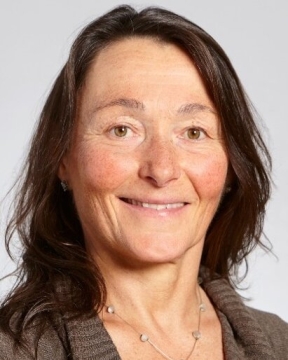
Isabelle Mansuy is a distinguished figure in the fields of neuroscience and epigenetics, holding a professorship in neuroepigenetics at the Medical Faculty of the University of Zürich (UZH) and at the Department of Health Sciences and Technology (D-HEST) of the Swiss Federal Institute of Technology Zürich (ETHZ). She serves as co-director of the Brain Research Institute at UZH and vice-head of the Institute for Neuroscience at D-HEST, ETHZ. Her laboratory is based at the Irchel Campus of UZH in Zürich, Switzerland.
Isabelle Mansuy started her scientific career with an engineer degree in molecular biology and biotechnology and a Master's degree in molecular biology from the Université Louis Pasteur in Strasbourg, France. She pursued her Ph.D. in developmental neurobiology at the Friedrich Miescher Institute in Basel, Switzerland, earning a European doctorate from the Université Louis Pasteur in 1994. Her postdoctoral training took her to the Center for Neurobiology and Behavior at Columbia University in New York, where she worked in the laboratory of Nobel laureate Eric Kandel at the Howard Hughes Medical Institute. She then established her own laboratory as assistant professor in neurobiology at ETHZ in Dec 1998, and was promoted to associate professor in molecular cognition then to full professor in neuroepigenetics, a chair she created at the interface of neuroscience and epigenetics.
Mansuy's early research made landmark contributions to the molecular mechanisms of learning and memory. She identified the protein phosphatases calcineurin and PP1 as key memory suppressors in the mammalian brain — molecular brakes that actively promote forgetting. Using inducible transgenic mouse models she pioneered, her laboratory demonstrated that inhibiting these enzymes enhances memory and long-term potentiation and reverses age-related memory decline, while their overactivation impairs cognition. These findings, published in high-impact journals, fundamentally reshaped the understanding of memory formation including traumatic memory and opened new avenues for the treatment of brain conditions such as Alzheimer's disease and posttraumatic stress disorder.
In parallel with her work on cognition, in the early 2000s, Mansuy pioneered a new research direction that has become her defining contribution: the biology of epigenetic inheritance in mammals. Her goal was to identify the epigenetic mechanisms underlying the heritability of phenotypic traits induced by life experiences across generations. She developed a mouse model of postnatal traumatic stress (MSUS) and demonstrated for the first time that trauma in early life can alter behavior, physiology and metabolism across multiple generations through both, the maternal and paternal lineages. These heritable effects are transmitted without changes to the DNA sequence, establishing the existence of a non-genetic form of heredity in mammals. This work provided the first experimental evidence that acquired traits can be passed across generations in mammals, challenging the long-held dogma of genetic determinism.
Mansuy has contributed decisively to uncovering the molecular mechanisms underlying transgenerational epigenetic inheritance. Her laboratory provided causal evidence that RNA in sperm acts as a vector of transfert of the effects of paternal trauma to offspring, establishing an RNA-based mode of heredity in mammals, known to exist in plants and invertebrates. Her team further demonstrated that circulating blood factors and extracellular vesicles can relay stress signals from the body to the germline, revealing a systemic pathway by which environmental exposures become embedded in the epigenome of germ cells. She also showed that these induced changes and their associated behavioral symptoms can be reversed by environmental enrichment, offering a proof-of-concept for therapeutic intervention.
Mansuy has been involved in several national and international research consortia to translate findings from mouse models to human populations, including the EU Horizon projects EarlyCause, FAMILY, HappyMums and EMPATHY. Her translational work with clinicians is examining whether epigenetic factors identified in animal models are also altered in patients with a history of childhood or adult trauma, with direct implications for mental and physical health care. Her research has far-reaching consequences for public health, policy and society, transforming the understanding of heredity and highlighting the importance of paternal and maternal early life environments for the health of future generations. The preventative potential of positive environments demonstrated in her models offers concrete leads for improving care of populations at risk.
In recognition of her contributions to science and society, Mansuy has received numerous distinctions including the Robert Bing Prize, the FEBS Anniversary Award, the Boehringer Ingelheim FENS Research Award and the EMBO Young Investigator Program Award. She was elected to the European Academy of Sciences (EURASC), the Swiss Academy of Medical Sciences and EMBO. She was decorated as Knight in the National Order of Merit and Knight in the Legion of Honor by the French Republic. She has co-authored over 200 research articles, reviews, and book chapters and has published books on epigenetics for the lay public in French ('Reprenons le contrôle de nos gènes', Larousse) and German ('Wir können unsere Gene steuern', Berlin Verlag). She has mentored dozens of Ph.D. students and postdoctoral researchers and is widely recognized as a founder and leading voice of the field of epigenetic inheritance.

www.flogen.org/