Science-based decision-making is essential for sustainable development, yet conspiracy theories, misinformation, and distrust in scientific institutions can significantly undermine progress in public health, climate action, energy transition, education, and technological innovation. At the same time, open scientific inquiry, critical thinking, and transparent debate remain fundamental to the advancement of knowledge and to the resilience of democratic and sustainable societies.
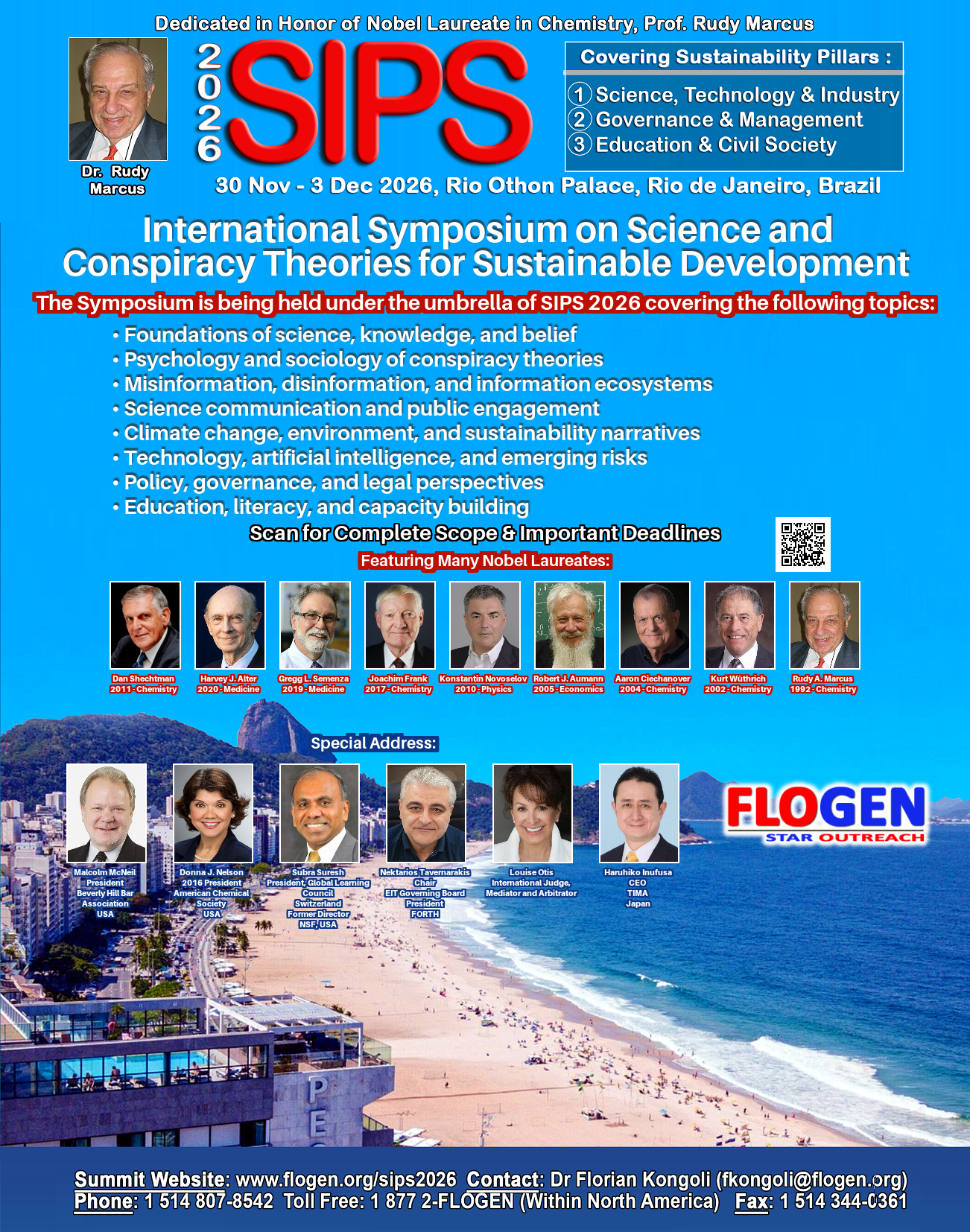
This symposium aims to bring together researchers, scientists, educators, policymakers, communication experts, legal scholars, and industry leaders to examine the relationship between science, conspiracy theories, public trust, and sustainable development. It will provide an interdisciplinary platform to discuss the origins, spread, and consequences of conspiracy theories, as well as practical strategies to strengthen scientific literacy, evidence-based policy, and responsible communication in support of sustainable development.
Topics include, but are not limited to:
Foundations of Science, Knowledge, and Belief
- Scientific method, evidence, and reproducibility
- Distinction between science, pseudoscience, and conspiracy theories
- Epistemology, truth, and public understanding of science
- Critical thinking and reasoning in scientific discourse
Psychology and Sociology of Conspiracy Theories
- Cognitive biases and belief formation
- Social, cultural, and political drivers of conspiracy theories
- Group identity, polarization, and distrust in institutions
- Fear, uncertainty, and crisis as drivers of conspiratorial thinking
Misinformation, Disinformation, and Information Ecosystems
- Spread of misinformation and disinformation in digital environments
- Role of social media platforms and algorithmic amplification
- Virality, echo chambers, and network effects
- Fact-checking, verification, and information resilience
Science Communication and Public Engagement
- Strategies for effective science communication
- Communicating uncertainty, risk, and scientific consensus
- Public engagement and dialogue around controversial scientific issues
- Role of journalism, media, and educators in strengthening trust in science
Conspiracy Theories in Health and Medicine
- Vaccine misinformation and public health consequences
- Conspiracy narratives related to pandemics and global health
- Distrust in medical science, pharmaceuticals, and biotechnology
- Science communication in healthcare emergencies
Climate Change, Environment, and Sustainability Narratives
- Climate change denial and environmental misinformation
- Conspiracy theories affecting sustainability policies
- Public perception of environmental science and risk
- Communication strategies for climate science and ecological transition
Technology, Artificial Intelligence, and Emerging Risks
- Artificial intelligence in detection and analysis of misinformation
- Deepfakes, synthetic media, and erosion of trust
- Conspiracy theories related to AI, biotechnology, and emerging technologies
- Digital governance and ethical challenges in information systems
Policy, Governance, and Legal Perspectives
- Policy responses to misinformation and conspiracy theories
- Balancing freedom of expression and public protection
- Legal and regulatory approaches to disinformation
- International cooperation and institutional responses
Education, Literacy, and Capacity Building
- Scientific literacy and media literacy for sustainable societies
- Educational approaches to combating misinformation
- Curriculum development for critical thinking and evidence assessment
- Capacity building for teachers, institutions, and communities
Economic, Industrial, and Societal Impacts
- Economic costs of misinformation and conspiracy-driven behavior
- Impacts on innovation, industry, and sustainable development goals
- Organizational trust, crisis management, and reputational risk
- Building resilient institutions and sustainable information ecosystems