
In Honor of Nobel Laureate Dr. Aaron Ciechanover


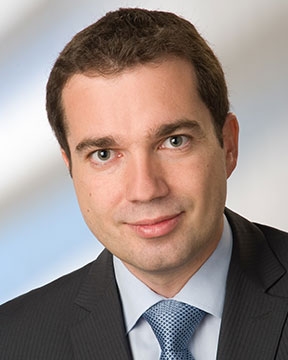 |
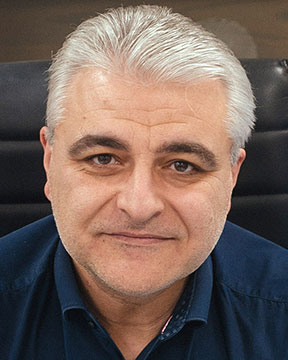
Dr. Juergen AntrekowitschChair of Nonferrous Metallurgy, University of LeobenImproving Biocoke For Increased Applicability In Metallurgy 8th Intl. Symp. on Sustainable Carbon and Biocoke and their Industrial Application Back to Plenary Lectures » |
Abstract:The use of biocoke in metallurgical processes to reduce the carbon footprint of metal production has gained significant traction in recent years. This trend is particularly evident in Central Europe, where biocoke production has grown rapidly. While utilization of biocoke has already become standard in certain processes, such as ferroalloy production, its implementation in other metallurgical routes remains challenging. Key limitations include its high surface area and reactivity, low mechanical strength, and low bulk density. These properties often make even partial substitution of fossil carbon infeasible - especially in systems like rotary kilns, small shaft furnaces or vertical retorts. In such setups, the reducing agent undergoes a pre-heating phase and ideally remains inert for one to two hours before entering the reduction zone. Under these conditions, conventional biocoke is ineffective. At the Chair of Nonferrous Metallurgy, Technical University of Leoben, new strategies have been developed to tailor the properties of pyrolyzed biomass for metallurgical use. Through advanced micro-granulation combined with small quantities of special additives, reactivity can be reduced by at least 50%. This treatment also enhances density and improves performance in possible subsequent agglomeration processes such as briquetting. |
|